 Migraine Journal







Migraine Food Diary: Free Printable That Records When You Ate
A free printable migraine food diary: a week of meals with times, skipped meals, caffeine, alcohol, water and sleep, and what you ate before an attack.
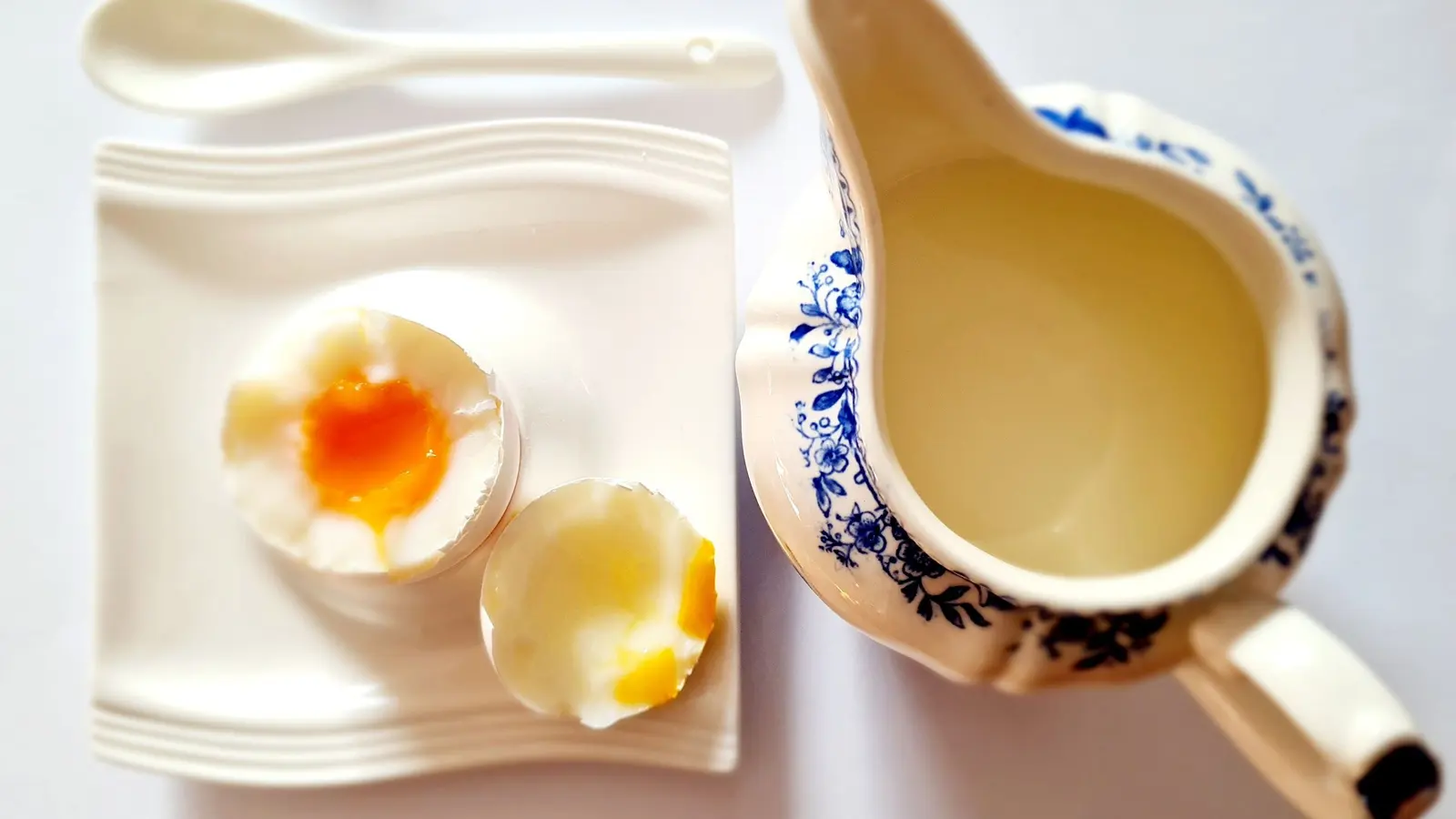
Download the migraine food diary (PDF, 1 page): free, no email required. One sheet covers one week. Print several; it takes weeks, not days, to show anything.
On iPhone and would rather not print? Migraine Journal lets you tick the food and drink in play when you log an attack (skipped meal, caffeine, alcohol, dehydration, chocolate, aged cheese, processed meat), alongside sleep hours, and counts which ones come up most. Free to track.
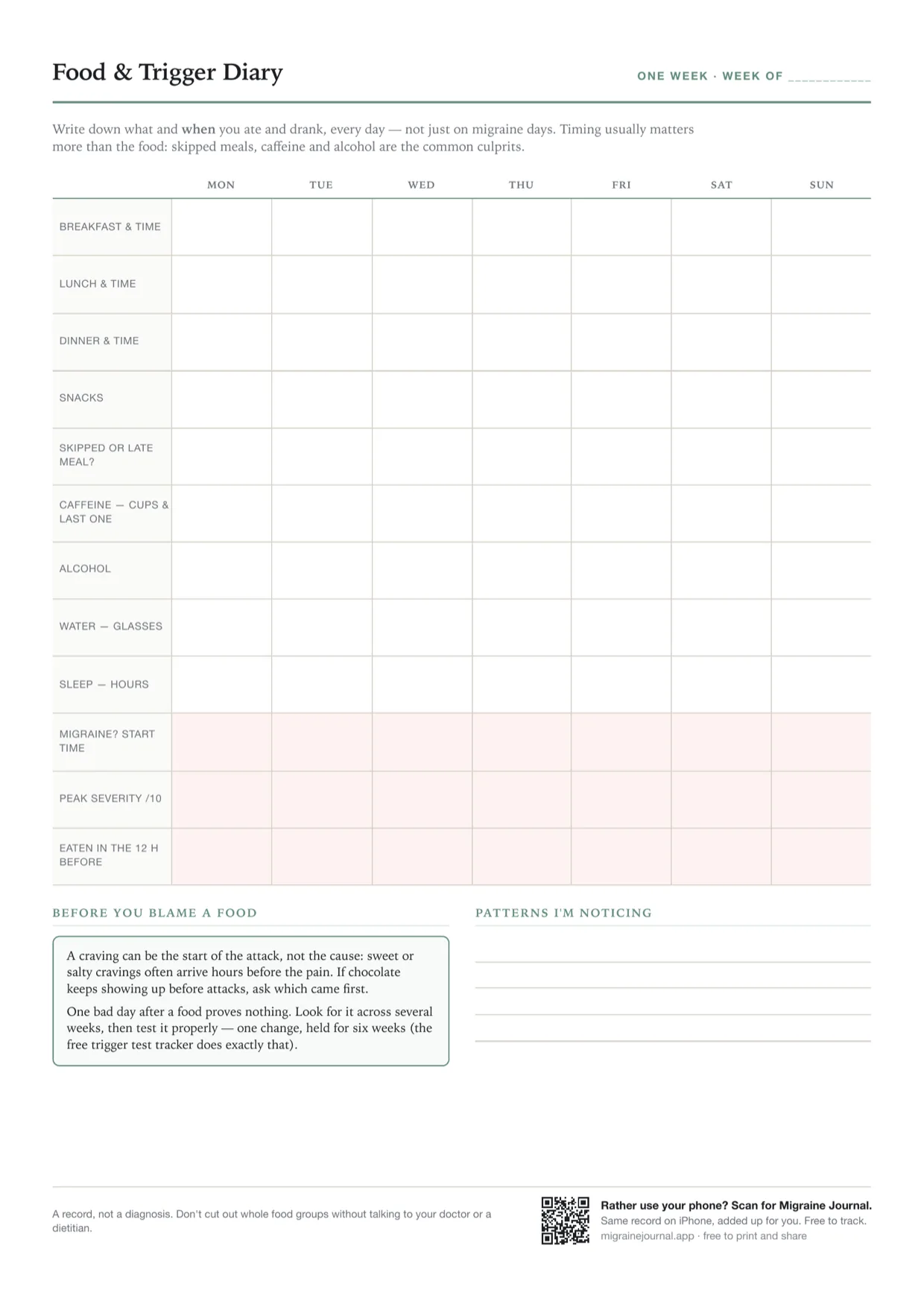
Most migraine food diaries ask what you ate. This one asks when, because for most people timing turns out to matter more than the food. Skipping a meal, the time of your last coffee and an evening’s drinking are easier to catch, and more often the answer, than a single ingredient. The NHS lists skipping meals and too much caffeine among the common migraine triggers, and advises eating at regular times.
If you’re looking for which foods are said to trigger migraine, why the famous trigger-food list is wrong covers that. This page is about how to record it so you don’t fool yourself.
The rows, Monday to Sunday
Fill in every day, not just migraine days. That’s the rule the whole sheet depends on.
- Breakfast, lunch and dinner, each with a time. “Toast, 07:15” beats “toast”. A gap of seven hours between breakfast and lunch is visible only if the times are there.
- Snacks.
- Skipped or late meal? A tick or the time. It gets its own row because it’s the most common culprit and the easiest to forget by evening.
- Caffeine: cups, and the last one. Both the amount and the time. A coffee at 4pm and a coffee at 9am are different variables, and so is a weekend with none. Caffeine and migraines explains why.
- Alcohol. What and how much. Alcohol and migraines covers why it’s one of the better-supported dietary links.
- Water, in glasses.
- Sleep, in hours. On a food diary, because a short night and a skipped breakfast often arrive together, and you need to tell them apart.
The three pink rows are for attack days: migraine start time, peak severity out of 10, and what you ate in the 12 hours before. The last one is a second look at the same day from the attack’s point of view: you’re writing down what came before the pain, in order.
Before you blame a food
The box at the bottom of the sheet holds the two warnings that matter most.
A craving can be the start of the attack, not the cause. Food cravings are a recognised premonitory symptom: early warning signs that come before the headache. The Migraine Trust points out that a food which seems to set off an attack may actually be a craving during that phase, which can last up to 72 hours. If chocolate keeps showing up before attacks, ask which came first. A blinded chocolate study is part of why that question matters, and migraine trigger foods goes through it.
One bad day after a food proves nothing. Attack frequency moves around on its own. A food has to show up before attacks again and again, and be noticeably rarer on good days, before it’s worth testing. That’s why the clear days are on the sheet.
From suspicion to test
After several weeks, write any pattern in the “Patterns I’m noticing” lines. Then, if a suspect holds up, test it properly: change one thing, hold it for six weeks, and compare against a baseline. The trigger test tracker is a one-page sheet laid out for exactly that, and how to track migraine triggers covers the method and the traps.
Test timing before contents. Regular meal times need no restriction at all, and if attacks fall when the gaps close, you’ve found your answer without giving up a food you like.
And don’t cut out whole food groups on the strength of a diary. That’s a conversation with your doctor or a dietitian.
Paper or the app
The paper diary does one thing the app doesn’t: it records your food on every day, including the good ones. That’s the comparison a food question needs.
Migraine Journal works from the attack side. When you log an attack, you tick what was in play from a list that includes skipped meal, dehydration, caffeine, alcohol, chocolate, aged cheese and processed meat, plus up to three of your own triggers on the free tier, and you record the hours you slept. The start time is stamped when you log, and the notes field holds the detail (“last coffee 15:30, lunch at 2”). The free Insights tab shows your most frequent triggers. Comparing how often attacks follow a trigger against your usual rate, the step that separates a real pattern from a frequent habit, is part of Plus.
Because the app records triggers when you log an attack, not on clear days, use the sheet for the first few weeks if food is the question. Then let the app carry the long-term record.
Print settings
Print at 100% on A4; it fits US Letter. Keep it on the fridge, where meals happen, and fill in each meal as you eat it rather than reconstructing the day at bedtime. All the printables are at free downloads. A diary is a record, not a diagnosis.
Quick answers
What should a migraine food diary include?
Every meal with the time you ate it, snacks, whether a meal was skipped or late, cups of caffeine and the time of the last one, alcohol, water and hours of sleep. On attack days, add the start time, peak severity and what you ate in the 12 hours before.
Why record food on days without a migraine?
Because a food that appears before half your attacks may also appear on most of your good days. Without the clear days you can't tell a trigger from something you simply eat a lot of.
Can a food craving be a sign of a migraine coming?
Yes. Food cravings are a recognised premonitory symptom, and that phase can start hours or even days before the pain. If chocolate keeps appearing before attacks, it may be the attack making you want chocolate, not the chocolate causing the attack.
How long should you keep a food diary for migraine?
Several weeks before reading anything into it. One bad day after a food proves nothing. If a suspect emerges, test it properly: change that one thing for six weeks against a baseline, with the trigger test tracker.
Or skip the printing
The sheet works on its own, and plenty of people never want anything else. The app records the same fields, plus the barometric-pressure change over the preceding 24 hours, which is the one column nobody can fill in from memory afterwards.
This article is general information, not medical advice. Talk to your GP or neurologist about your own symptoms, medication, and treatment.