 Migraine Journal
Does Barometric Pressure Cause Migraines? Why Studies Disagree
Sometimes, for some people. Whether barometric pressure causes migraines splits the research for a reason that decides what you need to record.
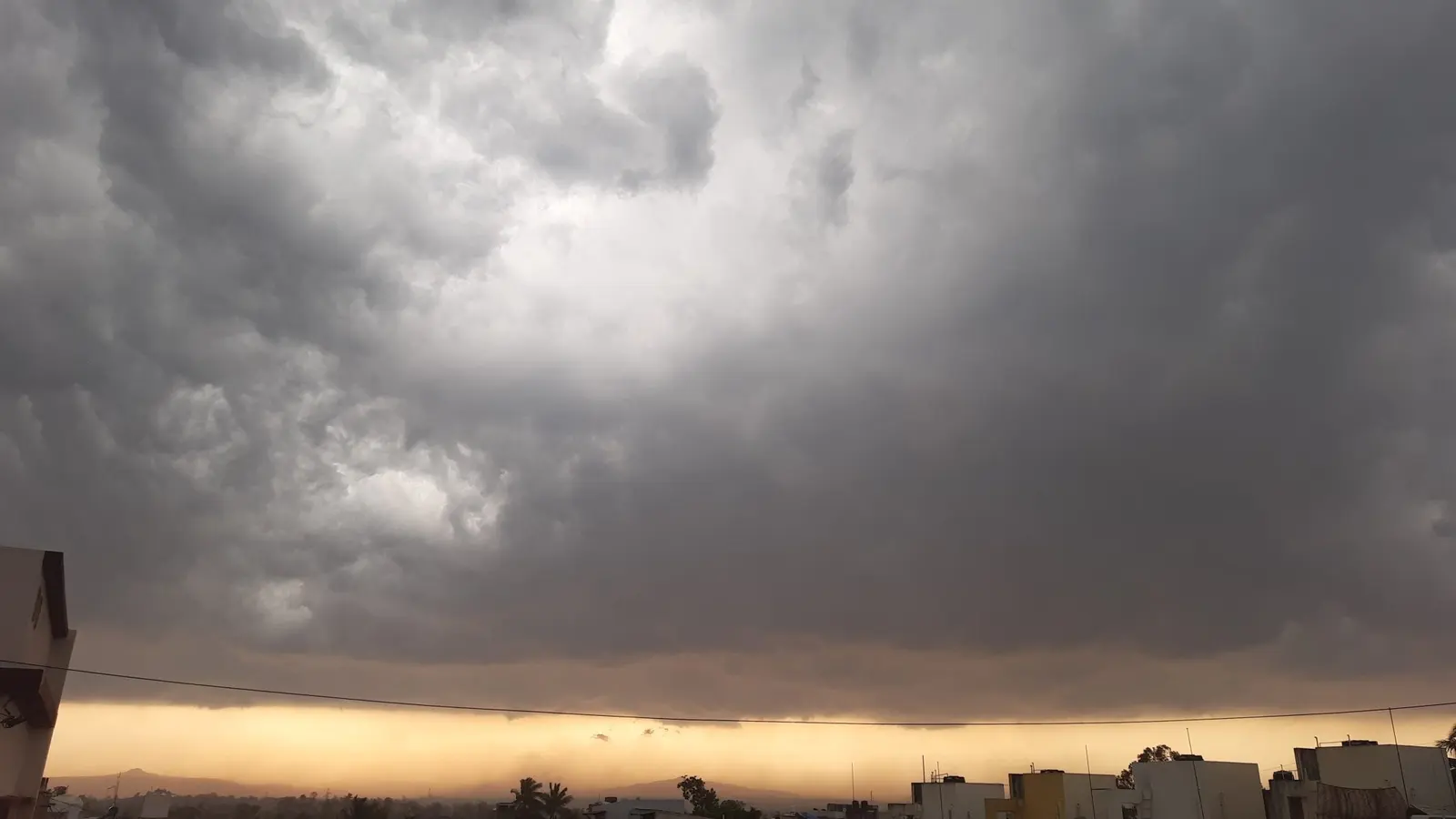
Sometimes, for some people, and the research genuinely splits on it. That is not a hedge on the way to a real answer. The split is the answer, and the reason behind it decides what you should do about it.
A 2025 systematic review gathered 14 studies covering 2,696 people. On attack frequency, several found a real association with falling or rapidly changing pressure. Several found none. On severity the results contradicted each other outright. On how long attacks lasted, three studies looked and all three found nothing.
Fourteen studies do not disagree like that about a straightforward trigger.
Weather sensitivity is a subgroup, not a universal
In Kimoto and colleagues’ year-long diary study, 28 people with migraine kept daily records. Weather change was associated with attacks in 18 of them, which is 64%. It also means it was not associated in the other third.
That single number explains most of the literature. Recruit a hundred people, average them together, and a strong effect in two-thirds gets dragged toward zero by the third who have no pressure response at all. Recruit a different hundred with a different mix and the dilution goes further.
Which is roughly what happened in the largest careful attempt. Li and colleagues followed 98 adults with episodic migraine around Boston across 4,406 days of observation and found no significant association between barometric pressure and attack onset. Humidity showed one, but only in the warm season.
Two well-run studies, opposite conclusions, and neither is faulty. They reported a group average of something that varies enormously between individuals. So the population answer and your answer are different questions, and only one of them is any use to you.
The effect attaches to change, not to level
Where researchers do find something, it tracks the change in pressure rather than how high or low it happens to be sitting.
Kimoto’s group saw attack frequency rise when pressure fell by more than 5 hPa between the day of the headache and the day after. The systematic review notes another study finding a drop in the six hours before onset, and, pointing the other way, a rise of more than 15 mb across 24 hours associated with fewer attacks.
One unit note, since it causes needless confusion: a hectopascal and a millibar are the same size. An app reporting 1008 hPa and one reporting 1008 mb are telling you the same thing.
Five hPa is not a large change. Ordinary daily drift is a couple of millibars; a front moving through can be ten or more inside a day. This is precisely why “rainy” is a worthless diary entry and a number is not. Rain describes what already arrived. The pressure change describes the transition, and the transition is what the sensitive group appears to react to.
Two reasons you cannot answer this from memory
Pressure is the one variable you cannot reconstruct from memory. You can roughly remember how you slept, what you ate, whether the week was bad. Nobody can recall what the barometer did the day before an attack three weeks ago, and thinking harder will not recover it.
It is also the variable most exposed to the trap that ruins trigger diaries. Premonitory symptoms begin hours to a day before the pain, and heightened sensitivity is part of them, which is why what looks like a trigger is often the attack already starting. If you feel weather-sensitive on the morning of an attack, that feeling is not independent evidence about the weather. It may be the prodrome doing the noticing.
So the reading has to be taken by something that is not you, at the moment you log, without your judgement involved.
What to record
Two fields, added to whatever you already keep:
- The pressure now, in hPa or mb, at the moment you log the attack
- The change across the previous 24 hours, as a signed number
Any weather app gives you the first. The second is the one that matters and the one nobody writes down. On paper the workable version is to note the reading at the same time each day, so the differences fall out of the column at the end of the month; the free printable diary has room for it.
Migraine Journal records the 24-hour pressure change automatically when you log, in millibars, because it is the field that cannot be backfilled and is easy to forget. Its risk bands sit at a 4 mb fall and an 8 mb fall, which brackets the 5 hPa figure from Kimoto’s study on either side.
Then wait. Months rather than weeks, because you need enough attacks and enough clear days across enough different weather for the comparison to carry any weight. A fortnight of tracking that happens to include one stormy week will tell you pressure is your trigger whether it is or not.
Weather is also the trigger two different explanations both claim. Pressure changes get blamed for sinus pain and for migraine alike, and if your weather headaches come with facial pressure and a blocked nose, sinus headache or migraine is the question to settle first — most self-diagnosed sinus headache turns out to meet migraine criteria.
How many attacks before the comparison means anything
The arithmetic is worth seeing, because it explains why a fortnight of tracking misleads.
Suppose you average two attacks a month, and a front worth noticing crosses your area roughly once a week. In any given month, pure coincidence puts an attack within a day of a pressure drop about half the time. Two attacks, one near a front — that’s a coin flip wearing a pattern’s clothes.
What separates signal from coincidence is the comparison nobody makes: the fronts without attacks. If eight pressure drops crossed your area in three months and your six attacks cluster around five of them, that’s a rate — attacks on drop days versus attacks on flat days — and it means something. If the six attacks scatter evenly across drops and calm weeks alike, that means something too, and it’s just as useful: pressure is off your suspect list, permanently.
That comparison needs both columns filled. Attacks get logged because they’re memorable; the flat, painless Tuesdays don’t, and without them there’s no denominator. It’s the same reason the trigger-tracking method insists on recording quiet days.
Why your weather app’s number may not match your neighbour’s
Two apps can disagree by several millibars about the same sky, and neither is broken. Stations sit at different altitudes, some report station pressure and some sea-level-adjusted pressure, and sampling intervals differ — an hourly reading can miss a fast drop that a continuous barometer catches.
None of that matters much for this purpose, with one rule: use the same source for every reading. The variable you’re testing is change, and change survives a constant offset. Ten readings from one app tell you more than ten readings from three. That rule is also what separates an app that records pressure usefully from one that only appears to — when the reading is taken matters more than which service it came from.
If it turns out to be yours
You cannot change the weather, which makes this look like a useless thing to discover. It is not, for three reasons.
An attack you expected is a different experience from one that arrived for no reason. A good deal of the distress in frequent migraine is the randomness, and a forecast takes some of that away. It is also a scheduling input: knowing a front is due on the day you were about to commit to something demanding is information you did not have before.
The third reason is the most practical. People who cannot find a trigger often start eliminating foods, and end up on a narrowing diet that never explains anything. Finding that your attacks track pressure is also finding that the cheese was never the problem.
What it is not is a reason to change medication timing off a forecast. Pre-emptive dosing on a prediction is a prescriber’s decision, and a reasonable thing to raise with yours once you have months of your own data behind it. Bring the numbers rather than the theory.
This is background reading, not medical advice. What to take and when are decisions for whoever prescribes for you. If your attacks change in character, or a headache comes on suddenly and severely, that needs a doctor rather than a diary.
Quick answers
Can barometric pressure changes trigger migraines?
For some people. A year-long diary study found weather change associated with attacks in about two-thirds of participants and not at all in the rest — which is why studies that average everyone together keep reaching opposite conclusions.
What size of pressure change matters?
Where studies find an effect it tracks the change, not the level. The most cited figure is a fall of more than 5 hPa (the same unit as a millibar) between days; ordinary daily drift is a couple of millibars, and a weather front can move ten or more in a day.
How do I find out if pressure affects my migraines?
Record the pressure at the moment you log and the signed change across the previous 24 hours — the one variable you cannot reconstruct from memory — then compare attack days against clear days over months, not weeks.
Track it in under a minute
Logs an attack in seconds, records the barometric-pressure change automatically, and prints the summary a neurologist asks for.
This article is general information, not medical advice. Talk to your GP or neurologist about your own symptoms, medication, and treatment.