 Migraine Journal
Why Do I Get Migraines at the Weekend? The Let-Down Effect
Attacks often arrive after stress ends rather than during it. One study found a near five-fold rise in the six hours after stress dropped — and it's testable.
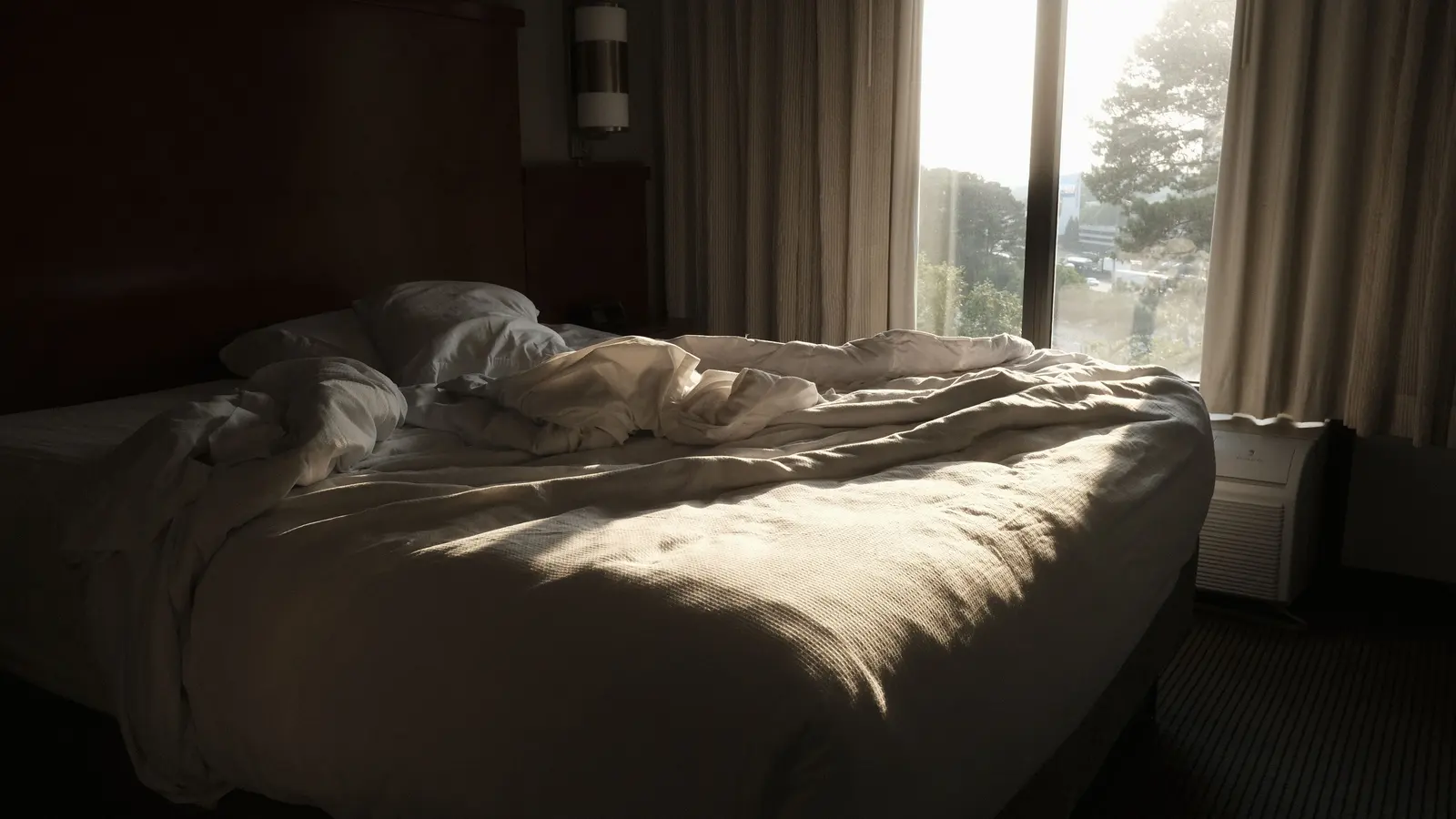
The pattern is specific enough that people describe it in the same words. Fine all week, flattened by Saturday lunchtime. Fine through the deadline, wrecked the day after it clears. Two weeks of a difficult project, then an attack on the first morning of the holiday.
The obvious explanation is that something about the weekend does it. The less obvious one has been tested, and it points at the week rather than the weekend.
What the study found
Researchers testing the “let-down headache” hypothesis followed people with migraine through electronic diaries, comparing perceived stress levels between evenings against the onset of attacks afterwards.
Reduction in perceived stress was associated with migraine onset, and the effect was strongest immediately: a decline in stress from one evening’s diary to the next was associated with a nearly five-fold increased risk of onset in the first six hours. Across the following 6, 12 and 18 hours the association held at a lower level, with odds ratios in the range of 1.5 to 1.9.
So the trigger, in that data, was not stress. It was stress ending. One proposed mechanism is cortisol, which rises under stress and dampens pain, then falls when the pressure comes off.
That reframes the Saturday attack. It is not the weekend doing something to you; it is the week finishing.
Why this is worth knowing rather than just interesting
Three practical consequences.
It explains a pattern that otherwise looks random. People who have been told stress is a trigger, and who then notice their attacks arrive on quiet days, often conclude the trigger advice is wrong and stop taking any of it seriously. It isn’t wrong — the timing is just displaced from where they were looking.
It moves the useful action earlier. If the risk window opens when the pressure comes off, the thing to notice is the Friday, not the Saturday morning.
It is a prediction, not a prohibition. Nothing here suggests avoiding rest, and “keep your stress level constant” is not a plan anyone can follow. What it gives you is a flagged window a few times a month, which is enough to move a difficult commitment or not book the one thing you would hate to cancel.
The two ordinary explanations you have to rule out first
Weekend attacks have two much simpler candidate causes, and they land on exactly the same mornings.
The lie-in. Sleep timing shifting by two hours on Saturday is a change in the same direction as jet lag, and irregular sleep is among the most consistently reported factors in migraine.
The delayed first coffee. If you drink coffee at 7:30 on weekdays and 10:30 at weekends, that is a three-hour withdrawal gap arriving on the same morning as everything else.
Neither is exotic and both are far easier to test than a cortisol hypothesis, which is why they come first. Each also has a fuller test of its own: the two-average method for sleep separates short nights from shifted timing, and the two-week caffeine protocol separates withdrawal from caffeine acting as a trigger. Hold wake-up time within about half an hour of your weekday time for three or four weekends, keep the first caffeine at the usual hour, and change nothing else. If the Saturday attacks continue unchanged, you have ruled out the two easy explanations and the let-down pattern is the one left standing.
That is a proper single-variable test and it deserves running properly — how to track migraine triggers without fooling yourself covers the method, including the part where you write down what else changed that week.
How to see it in a record you already have
This is one of the few migraine questions answerable from data you may already be sitting on, because it needs only dates.
Take three months of attack start dates and tally them by day of the week. Then tally your total days by day of the week, which is a flat seven-way split, and compare. If Saturday and Sunday between them hold noticeably more than two-sevenths of your attacks, the pattern is real for you.
Two cautions on reading it. Three months of a typical attack rate is a small sample, so a two-attack difference between days means nothing — look for something closer to double. And onset date is the measurement, not the date you wrote it down: an attack that began at 11pm on Friday is a Friday attack, and filing it as Saturday would create exactly the pattern you are testing for.
Migraine Journal charts attacks by weekday and by time of day, which makes this a glance rather than a tally. A wall calendar with a mark per attack answers it just as well over three months, and the printable diary has a monthly grid laid out for the marks.
If it turns out to be your pattern
The useful version of this is not lifestyle advice. It is that you now have a named, recurring, roughly predictable higher-risk window — and that is a genuinely different conversation to have with a clinician than “they seem to come out of nowhere”.
Bring the weekday distribution with the counts attached: “over three months, eleven of my seventeen attacks started on a Friday evening or Saturday”. That sentence is actionable in a way an impression is not, and it sits alongside the four figures in what to bring to a neurologist appointment.
Anything about timing medication around a predicted window is a prescribing question rather than something to arrange from a page like this one, and there is a real tension between treating early and treating often. None of this is medical advice, and a pattern that changes character, or a headache that comes on suddenly and severely, needs a doctor rather than a tally.
Quick answers
Why do migraines start at the weekend?
Often because stress ended rather than because the weekend caused it. A diary study testing the let-down hypothesis found that a decline in perceived stress was associated with a near five-fold increase in migraine onset over the following six hours.
Is it the lie-in or the missed coffee?
Those matter too, and they are easier to test than the stress drop. A weekend lie-in shifts sleep timing and a delayed first coffee produces caffeine withdrawal, both of which land on the same mornings — which is exactly why the pattern needs separating rather than assuming.
How do you tell which one it is?
Hold wake-up time and caffeine timing constant across Saturday and Sunday for three or four weeks while changing nothing else. If the weekend attacks continue unchanged, sleep and caffeine were not the mechanism.
Does this mean you should avoid relaxing?
No, and nothing about the finding suggests that. What it offers is prediction rather than avoidance: knowing that the drop after a hard week is a higher-risk window is worth more than trying to hold stress steady, which is not a plan anyone can follow.
Track it in under a minute
Logs an attack in seconds, records the barometric-pressure change automatically, and prints the summary a neurologist asks for.
This article is general information, not medical advice. Talk to your GP or neurologist about your own symptoms, medication, and treatment.