 Migraine Journal
FMLA for Migraines: What the Certification Form Actually Asks
FMLA for migraines runs through one form, WH-380-E. What its fields ask — episode frequency, duration, treatment dates — and the diary numbers that fill them.
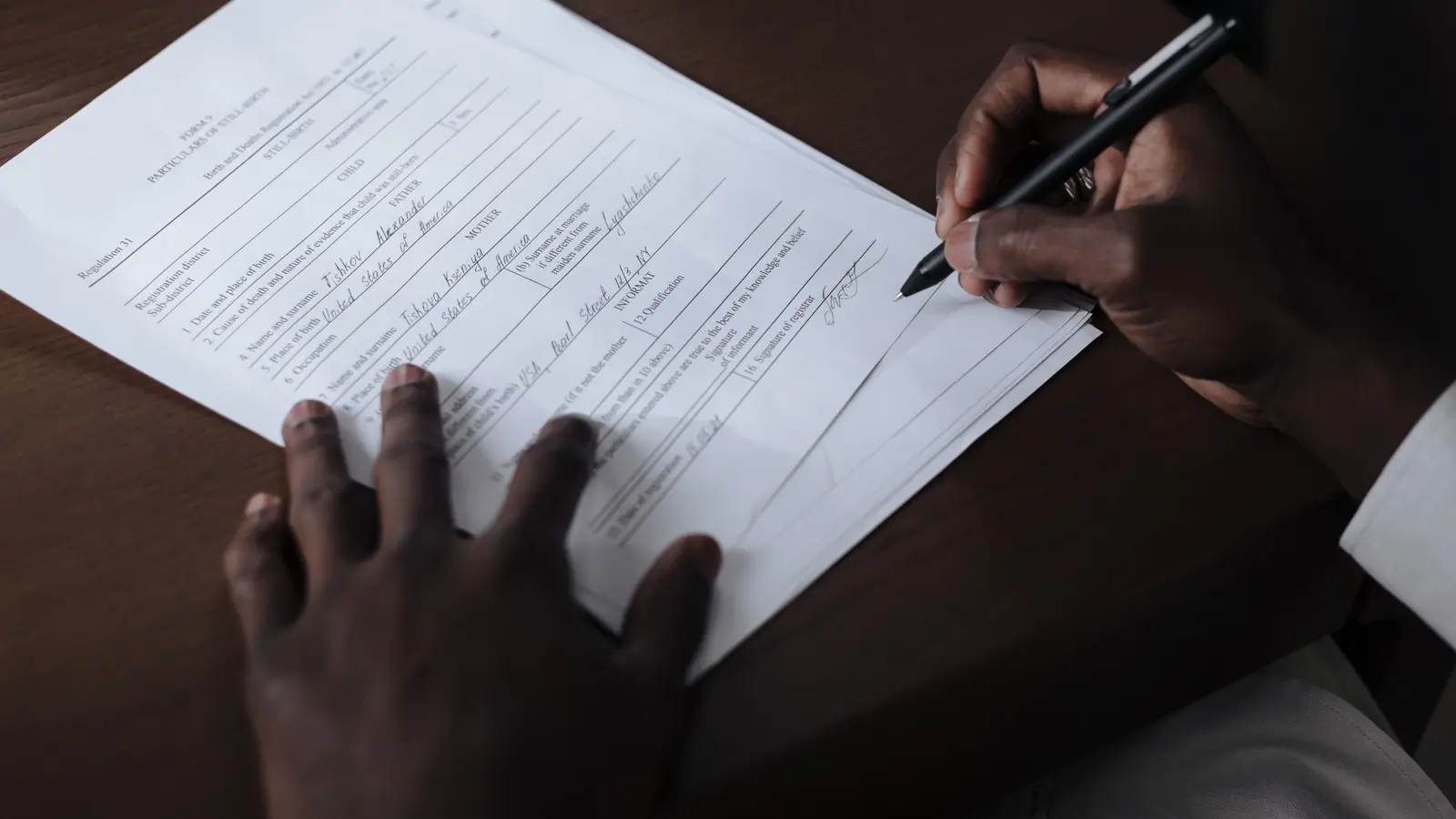
Migraine can qualify for FMLA leave as a chronic serious health condition, and the process runs through one document: form WH-380-E, the medical certification your health care provider fills out. Its hardest question asks how often your episodes of incapacity will occur over the next six months and how long each will last. If your diary can produce those two numbers, attacks per month and hours or days per attack, you have already done the part most people scramble on. Everything below maps the form’s fields to the records that answer them.
Migraine is the form’s own example
You do not need to argue that migraine belongs on this form. Form WH-380-E names it twice: the chronic-conditions checkbox in Part A reads “(e.g. asthma, migraine headaches)”, and the definitions chart on page 4 uses the same example. Under the Department of Labor’s definition of a chronic serious health condition, the condition must require visits to a health care provider at least twice a year, recur over an extended period, and it may cause episodic rather than continuous incapacity. Episodic incapacity is the clause written for conditions like migraine: you are fine on Monday, unable to look at a screen on Tuesday, fine again on Thursday.
Qualifying as a condition is not the same as being eligible as an employee. Per DOL Fact Sheet #28, FMLA covers you if you have worked for a covered employer for at least 12 months, worked at least 1,250 hours in the 12 months before the leave, and work at a site where the employer has 50 or more employees within 75 miles. If you clear those three, the rest of this post applies.
Intermittent leave, in one paragraph
FMLA leave does not have to be one continuous block. The same fact sheet describes intermittent leave: when medically necessary, you can take your protected leave in separate blocks of time for a single condition, down to hours rather than days. That is the shape that fits an episodic condition. You are not asking for twelve weeks off; you are asking for Tuesday afternoon when an attack starts at 1pm, and for the protection that Tuesday afternoon does not count against you. The leave is unpaid unless your employer’s policies say otherwise, and it is job-protected.
The form, field by field
Section I is your employer’s part: your job title, your regular schedule, your essential job functions, and the date the certification is due back. They must give you at least 15 calendar days to return it; the deadline is printed right on the form.
Section II is your provider’s part, and this is where your diary earns its keep.
Part A, questions 1 and 2 ask for the approximate date the condition started and the provider’s best estimate of how long it will last. Your first logged attack, or your diagnosis date, answers the first. For chronic migraine the honest second answer is often “ongoing”, and the form itself warns in Part B that words like “unknown” and “indeterminate” may not be sufficient, which is exactly why the frequency estimate later carries the weight.
Part A, question 3 is the checkbox page. For migraine the relevant box is Chronic Conditions, which asserts that treatment visits at least twice per year are medically necessary. Your appointment history answers whether that is already true. If you have not seen anyone about your migraines in two years, this box is hard to check, and that is worth fixing before the paperwork, not for the paperwork.
Part B, question 5 asks for the dates of planned treatment visits. That is your upcoming appointments, copied over.
Part B, question 9 is the one the whole certification turns on. It reads, nearly verbatim: over the next 6 months, episodes of incapacity are estimated to occur ___ times per day, week, or month, and are likely to last approximately ___ hours or days per episode. Two blanks. Your diary fills both: count the attacks that actually stopped you working over the last three to six months, divide to get a monthly rate, and take a typical duration rather than your worst. Note what the form is asking for. “Incapacity” here means unable to work or perform regular daily activities, so a mild attack you worked through does not belong in the count, and inflating the number invites exactly the scrutiny you want to avoid.
Part C, question 10 asks the provider to identify at least one essential job function you cannot perform during an episode. Give your provider the concrete version before the appointment: screen work, driving, operating equipment, speaking on calls. “Has migraines” is not an answer to this question; “cannot tolerate screen light during an attack” is.
Filling in the medical sections is your clinician’s job, not yours, and their signature is what makes the certification. But question 9 asks for their best estimate, and an estimate built from your dated log is defensible in a way that “she thinks maybe four a month” is not. Bring a printed summary to the appointment: attacks in the last 90 days, average duration, work days affected. Six lines. Your provider will thank you, because they are being asked to put a number on something they only see in fifteen-minute snapshots.
Getting the two numbers on paper
You do not need software for this. A calendar and four columns per attack: date, start time, end time, and whether you missed work (left early, did not start, or worked through). After three months you can produce both of question 9’s numbers with a pencil. Log the start time when the attack begins, not at the end of the day; duration is the number you will misremember most. If you’d rather not tally by hand, Migraine Journal shows the attack count and average duration for any date range, which is the summary the form wants.
Notice and recertification, honestly
Two obligations sit on your side. First, notice: per DOL Fact Sheet #28E, foreseeable leave, like a scheduled treatment visit, needs 30 days’ notice where possible; unforeseeable leave, which is most migraine leave, needs notice as soon as practicable, and you generally must follow your employer’s normal call-in procedure. Second, recertification: your employer can ask you to redo this. Fact Sheet #28G says generally no more often than every 30 days and only in connection with an absence, though in all cases they may request recertification every six months. The practical reading: keep the diary running after approval. The record that got the certification is also the record that renews it without drama.
If you are not in the US
FMLA is US federal law and none of the above applies elsewhere. In the UK, migraine can fall under the Equality Act 2010, and the Migraine Trust’s guide to getting support at work covers reasonable adjustments and how to raise them. The mechanics differ, but the leverage is the same everywhere: dated records of frequency, duration, and work impact. Our guides to asking for migraine accommodations at work and the one-page accommodation letter template are written to work in any country, and the rest of the migraine at work resources live in one place.
One thing FMLA does not do, even in the US: it protects your absence, not your workday. It will not move your desk out from under an LED panel or get you a dark room for twenty minutes. Those are accommodation requests, and they run alongside FMLA, not instead of it. Many people end up filing both, with the same diary underneath each.
Start the log today, before the next attack, and in three months you will hand your provider a certification they can sign without guessing.
A record that holds up
Dates, duration, and severity, logged as it happens rather than reconstructed months later for a form. Everything exports, so the evidence behind a request stays yours and you decide how much of it anyone else sees.
This article is general information, not medical advice. Talk to your GP or neurologist about your own symptoms, medication, and treatment.