 Migraine Journal
Migraine Caregiver Burnout: The Job Nobody Names
Migraine caregiver burnout doesn't look like collapse. It looks like forecast-watching, quiet cancellations, and a resentment you're ashamed of. What helps.
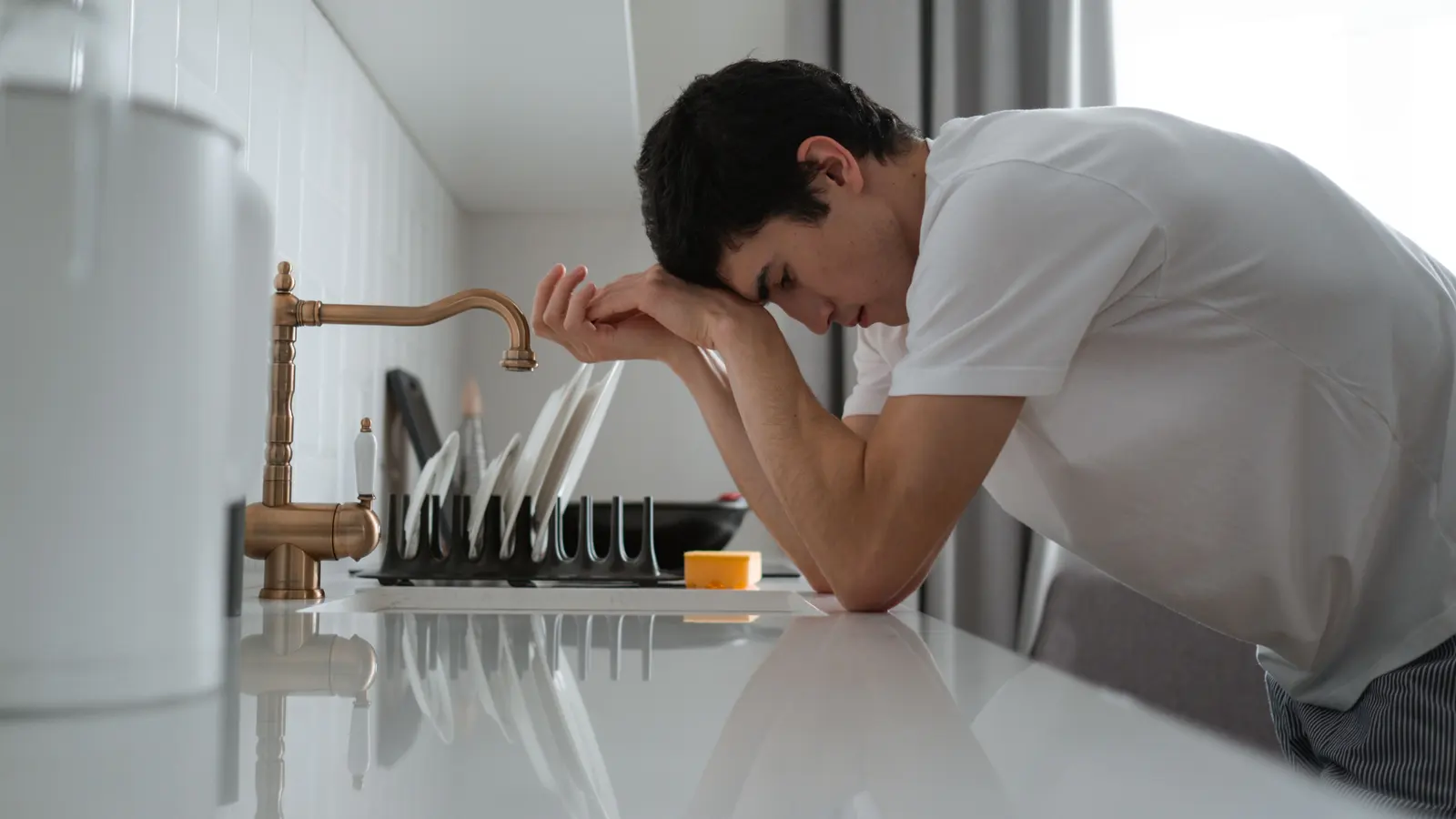
It’s 6:40 on a Friday and you’re standing at the kitchen counter, typing the cancellation text yourself. Third time since spring with these particular friends. You know the wording by heart now: so sorry, one of her bad ones, we’ll rebook. You hit send, set the phone face-down, and stand there in a quiet flat with an evening that no longer has anything in it.
Nobody asks how you’re doing with this. The doctor asks about her. Her mother asks about her. You ask about her, twenty times a day, in the low voice you’ve developed for the dark bedroom. You love her; that was never the question. But somewhere in the past year the caring turned into a job with unlisted duties and no time off, and you are more tired than you feel entitled to say.
That tiredness has a name, and it is not a character flaw. It’s what happens to anyone doing shift work with no schedule, no cover, and no acknowledgement that a shift is even happening.
The jobs that don’t appear on any list
If someone asked what you do, you’d say something modest. Bring water, keep things quiet, hold the fort. That’s the visible tenth. The rest:
Forecast-watching. You check the pressure map the way other people check football scores. You know a front is arriving Thursday before she does, and you’ve already started deciding what Thursday can safely contain.
Plan-B-making. Every plan you make now has a shadow plan stapled to it. Aisle seats. Who drives home. Whether the tickets are refundable. What you’ll tell the hosts. You do this automatically, for events months away, and it never registers as work because it happens inside your head.
Being the one who cancels. She’s horizontal in a dark room; the apology is yours to type. Which means you’re also the one who absorbs the small flicker of doubt from people who have heard it a few times now, and you absorb it silently, because defending her out loud would make it worse.
The vigilance that never switches off. Reading her face across the breakfast table. Clocking the eye-rub, the third yawn, the sentence she lost the end of. Half-listening through your own work call for the sound of the bedroom blinds coming down. There is no moment in the day when some part of you is not on duty.
Write those into a rota and you’ll notice the same name in every slot. That’s the job. Burnout is not a mystery once you’ve seen it written down.
Resentment is information, not betrayal
You can resent the condition while loving the person. Most caregivers manage both before lunch. The damage starts when you decide the resentment is a betrayal and push it somewhere out of sight, because it doesn’t stay there. It leaks out sideways: the half-second pause before “of course it’s fine,” the door shut a fraction too hard, the tally you’re keeping without meaning to keep one. She reads every bit of it. People mid-attack are bad at a lot of things; detecting the mood of the well person in the house is not one of them.
So treat the resentment as data instead. It tells you which specific loads have gotten too heavy, not that the love ran out. “I resent doing every single school run” is a logistics problem with a logistics answer. “I resent that we haven’t booked a holiday in two years” is a planning problem, and partly solvable. Resentment left as one undifferentiated fog is unbearable. Itemised, it’s a to-do list.
The guilt of being the well one
Your head works. You get to leave the house. Complaining feels obscene next to what she goes through, so you don’t, and the not-complaining slowly becomes its own weight.
Here is the part worth knowing: she is keeping a ledger too. In the CaMEO study, a large US study of life with migraine, 49% of people with migraine who lived with a partner agreed they would be a better partner if they didn’t have headaches. She sees what this costs you, probably more clearly than you think, and is likely ashamed of it. Two people each silently protecting the other from their own guilt is how a kitchen goes quiet for a year. The guilt isn’t evidence you’re failing her. It’s evidence you’re both still paying attention.
Randomness is half the exhaustion
The bad days are not what grinds you down. Not knowing which days will be bad is. A hard week you saw coming is a hard week; a good evening that collapses at 6:40 with no warning teaches you to stop trusting any evening, and living in permanent brace position is the most tiring thing a nervous system can do.
Which is why the single most relieving thing in a migraine household is usually not more sympathy. It’s predictability. When attacks get written down — start time, what the weather did, how the last two nights of sleep went — patterns emerge, and a malevolent lottery turns into something with edges. Not controllable. Legible. “Day three of a pressure swing” is survivable in a way that “again, for no reason” is not, for both of you. A notebook on the fridge does this fine. An app does it with less friction; Migraine Journal records barometric pressure automatically at the moment of the log, which matters because nobody mid-attack is going to look up the weather.
The attack-day playbook itself, what to bring in and when to leave the room, is a different article. So are the physical changes that make a home easier to have migraines in. This one is about you.
Divide the invisible admin, out loud, once
Pick a good week and put the unlisted jobs on the table by name. Prescription refills. Appointment bookings. The cancellation texts. Watching the forecast. Then divide them explicitly, and not all to you: she can own real jobs on the days she’s well. Some weeks the split will collapse back onto you, and that’s fine.
The point is not a perfect rota. The point is that the list now exists outside your head. Vigilance carried alone is exhausting partly because it’s invisible even to the person it protects; the moment it’s named, it stops being a private weather system and becomes shared work.
Respite taken without ceremony
Take the evening. Not the negotiated version, where you ask “are you sure you’ll be okay?” three times and she performs being okay so you can perform reluctance on your way out. A standing thing. Tuesday, gym or pub or your brother’s sofa, and it happens unless something is actually on fire. No ceremony leaving, no guilt imported on return.
This isn’t a treat you earn after a good caregiving week. It’s maintenance on the only person holding your half of the house up. Skipping it doesn’t make you devoted; it makes you the next casualty of the same condition.
And notice honestly when it’s gone past what an evening off can touch. If the tiredness has stopped responding to sleep, if you’re drinking more than you were a year ago, if you catch yourself fantasising not about leaving exactly, just about an empty flat and nobody to monitor — book an appointment with your own doctor and say the words “carer strain,” because they change what the appointment is about. And if the two of you can no longer talk about any of this without it curdling, a couples therapist is not an admission of failure. It’s a rota meeting with a referee, and couples who use one early tend to need it less.
Say it once, on a good day
One sentence, out loud, on a day her head is clear: “I love you, and I’m tired, and neither of those cancels the other.”
Not as an accusation, not as the opening of a bigger conversation she has to brace for. Just as a fact placed on the table, so the thing leaking out sideways has a front door instead. Most caregivers never say it, and the silence costs more than the sentence ever would.
If the person you’re carrying is a parent rather than a partner, the shape of it changes — distance, and someone who says it’s nothing. Helping an elderly parent with migraines covers what you can do from a hundred miles away and the one red flag that needs a doctor.
There’s a full set of guides for people on your side of the bedroom door at the caregivers hub.
Quick answers
What does migraine caregiver burnout actually look like?
Not collapse. Forecast-watching, plan-B-making, being the one who types the apology when plans are cancelled, and a vigilance that never switches off. None of it registers as work, because most of it happens inside your head.
Is it wrong to feel resentful?
The position this page takes is that resentment is information rather than betrayal. It usually marks a specific load that has gone unnamed for too long, which is why dividing the invisible admin out loud does more than trying to feel differently about it.
What actually helps?
Three things. Divide the invisible admin explicitly rather than letting it settle by default, take respite without ceremony or justification, and say the hard sentence once on a good day rather than in the middle of an attack.
Something you can hand them
The hardest part of helping is that the pattern lives in someone else’s head, and they are rarely in a state to write it down. A printed diary is the version that survives a bad week: one page, on the fridge, filled in by whoever is upright.
If they use an iPhone and would rather not deal with paper, Migraine Journal does the same job in under a minute.
This article is general information, not medical advice. Talk to your GP or neurologist about your own symptoms, medication, and treatment.